Tuesday, June 30, 2009

State University Libraries are Awarded Runner-up in IGI Global


The Ball State University Libraries were recently recognized for technology excellence by IGI Global, an international publishing company specializing in research publications in the fields of computer science and information technology management.

The corporation created an award and recognition program for an organization judged to use and promote innovative technological programs or systems that have proven critical to the successful integration, implementation, and diffusion of electronic resources within an academic library setting.

The submission by Dr. Arthur W. Hafner, Dean of University Libraries, and John B. Straw, Assistant Dean for Digital Initiatives and Special Collections, focused on the Libraries’ development of the Digital Media Repository (DMR). The submission was sent to IGI Global on April 29, 2009. Dr. Hafner was notified of the award in May. The interested reader can learn more about it at
www.igi-global.com/campaign/award.asp.

The focus of the submission centered on Ball State University Libraries’ collaborative resource, the Digital Media Repository, http://libx.bsu.edu, which offers 72 collections with more than 120,000 digital objects.

It provides a centralized, coordinated, and user-focused resource to serve the teaching, learning, academic achievement, and research needs of students, faculty, and others. The DMR brings together the digital collections and projects of the University Libraries into a single, cohesive, accessible, easy to navigate, Web-based environment, while also providing access to external digital resources that support the educational processes for instructional objectives and learning outcomes.

An analysis of visits to the DMR during the seven-month period of September 2008 through March 2009 showed 286,476 hits. In March 2009, for example, there were 89,151 visits to different collections in the DMR. These statistics reflect use by Ball State students, faculty, international researchers, the media, and many other users who are both local and global.

The DMR is a key component of the Libraries’ goal to expand digital initiatives and facilitate development of emerging media opportunities for learning, research, and classroom enhancement and it continues to be a highly successful resource in the ongoing transition from print to digital resources that meet the expectations and information needs of the Ball State academic community and the continually growing international global research community.

As runner-up, the University Libraries received a plaque and the opportunity to publish an academic article featuring best practices and examples of transitions from print to electronic resources in one of IGI Global’s premier reference books.

Labels: , , , ,

Thursday, May 28, 2009

Size, Versatility, Low Cost — Contributing Factors to Netbooks’ Popularity


Recently, some of the University Libraries’ personnel spoke about how they use their netbooks, citing convenience and cost as top attributes. The name, netbook, is apt for this small-size laptop computer because of its reliance on an Internet connection.

James Bradley, Head of Metadata & Digital Initiatives, spent about $375 on his black ASUS Eee PC 1000HE Netbook. It features a 10-inch screen and wireless N connection with Bluetooth connectability. It has a battery life of over seven hours on a charge. He spent another $25 to upgrade the memory to 2 GB RAM.

“I love it,” he said. “During work hours, I use it for e-mail, Web, and word processing. It is portable and easy to take to meetings, thus my notes on a meeting can be saved to my main workstation when I return and then form an electronic and searchable archive of meeting notes and agendas.”

Jim said that, when away from work, he also uses his netbook to watch videos, such as YouTube or Hulu, and he uses Adobe PhotoShop and publishes family photos on his Web site.

When John Straw, Assistant Dean for Digital Initiatives and Special Collections, recently attended the 2009 annual meeting of the Academic Libraries of Indiana, he saw several people using netbooks to take notes, view Web sites that the speakers mentioned, and to keep up with their e-mail.

“I have one now, too,” he said. “I just used it at a meeting. It is very compact and useful to take to meetings and to work on-the-go.”

Denise Kinney, Secretary to Library Assistant Deans, really likes her ASUS Eee 1000HA. It features a 160 GB hard drive, sports 1 GB RAM, and offers wireless G capability.

“Big things come in small packages,” she said. “It weighs only three pounds and can operate for five or six hours on the fully charged six-cell battery.”

Denise used her netbook recently while on a trip to access "Microsoft Street Tips and Maps" to locate a library in Michigan and other locations. She has used the wireless connectivity to locate genealogy information and to download knitting and crochet patterns, which she reads as she knits. Like Jim, she enjoys staying in touch with her family and friends, watching movies through Hulu and YouTube, and viewing digital photographs.

“Truly, there is no limit as to what may be accessed or stored on this netbook,” she said. “I have the world at my fingertips through my netbook.”

Robert Seaton, University Libraries’ Web Development Specialist, said he likes the portability of his Acer Aspire One with its 10.1-inch screen and 1.6 GHz Intel Atom N270 processor. He paid about $350 for the sapphire blue unit.

“I can take it with me everywhere,” he said. “The size is small so it’s like carrying a paper notebook, and it is a fast machine. It’s small enough that I can take it to a meeting and it won’t be distracting.”

Robert said that his netbook even plays some of today’s more popular 3D games. The units do not come standard with a CD-ROM drive, although it makes up for that by having several USB ports and an SD card reader as well as a multi-card reader. It has built-in wireless so any software that he wants can usually be downloaded and installed.

Because the price of the netbook is so reasonable and its performance is so high, the unit seems to be perfectly suited for almost everyone. For less than $400, the user can have a powerful, portable computer that offers word processing, video playback, e-mail, and other functionality. From any WiFi hotspot or ubiquitous 3G network, the netbook is perfect for providing convenient access to the Internet from home, work, or school.

Labels: , , , , ,

Outside Furniture Provides Gathering Spaces, Expands Use of Plazas


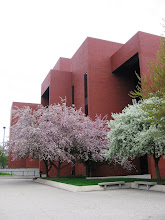
Recently, five outdoor tables were added to Bracken Library’s north and south plazas for student and faculty enjoyment. Already this furniture is popular with those who want to catch some sunshine while studying outside, taking a break, or grabbing a bite to eat al fresco.

Ball State University's plazas on the north and south sides of the library offer full wireless connectivity so that students and faculty can access the Libraries’ resources through their laptops or other portable devices. The tables are manufactured using 68% recycled material.

Providing the tables is another step toward making the University Libraries the most inviting, friendly space on campus for research, learning, and friends.

Labels: , , ,

The Libraries Upgrade E-Journal Access with MultiLink


In January 2009, the University Libraries embarked on a major project to overhaul how we manage access to online journals. We are now achieving a major milestone with the unveiling of SerialsSolution’s 360 Link software, which we are calling MultiLink.

MultiLink succeeds FindIt@BSU. From a user’s perspective, it works much the same way. Something that the user will notice that is different with MultiLink is a new blue button with some of the citations. Clicking the button produces a menu of links to multiple options for obtaining the citation’s full text.

In many cases, the University Libraries provide direct access to journal articles on the Web. However, when we do not have access, ILLiad provides speedy access via interlibrary loan. As always, there is an option to check the online catalog, CardCat. With MultiLink, we have added some new alternatives, including WorldCat, a global database of library resources, and Google Scholar, which indexes both commercially published and open access scholarly materials.

While the basic operation of MultiLink is not new to the University Libraries, it represents several major improvements in access to online scholarship. For example, we have implemented a 1-Click feature, where a click of the MultiLink button goes straight to a full-text article when one is available. MultiLink, as before with FindIt@BSU, is also accessible with the Citation Linker and an integrated Electronic Journals portal.

Very significant benefits arise from the fact that MultiLink and the Electronic Journals portal are integrated. Both services are driven by the same underlying database – the massive electronic journals database maintained by the Seattle-based SerialsSolutions, Inc. Prior to beginning our relationship with SerialsSolutions, Inc., the Libraries maintained links to electronic journals in three different “silos,” not an efficient arrangement. The single Electronic Resource Management System streamlines maintenance and will dramatically improve accuracy, which should translate to increased user success in finding full text.

Another improvement in electronic resource management will come with an integrated usage statistics component. This component will increase our capacity to make optimal collection and spending decisions.

For more information, contact James W. Hammons, Head of Library Technologies, JHammons@bsu.edu, 765-285-8032.

Labels: , , ,

Tuesday, May 26, 2009

Bracken Library Voted “Best Place to Study” by Ball State Community


The Ball State Daily News, a student-run newspaper with a circulation of 14,000, recently asked the campus community to vote for the “best” in several categories. More than 2,000 votes were cast online and at various ballot boxes around campus.

With helpful librarians, outstanding digital and print resources, and hundreds of PC and Mac workstations, it is no wonder Bracken Library was voted Best Place to Study. Bracken Library, located in the heart of campus, is the place to meet friends, study, research, and to finalize projects. Our doors are in constant motion 120.5 hours per week.

The University Libraries’ tagline is “A destination for research, learning, and friends.” These seven words summarize and convey the personality of our brand and its promise. Students know when they visit Bracken they are at a place where they can accomplish their work and achieve what they set out to do.

Labels: , ,

Tuesday, March 17, 2009

Libraries’ Support a Teaching, Learning, and Research Environment


Our librarians and paraprofessional personnel are committed to providing consistently gracious service to our students and faculty through our Roll Out the Red personal commitments of great care and through the Libraries’ many programs, services, and rich collections that are a strategic part of each student’s academic achievement and success plan.

Bracken Library supports immersive learning by being open Sunday nights through Thursday nights until 3 a.m. On Fridays, we open at 7 a.m. and close at 9 p.m. with Saturday hours from 9 a.m. to 6:30 p.m. Altogether, we provide 120.5 hours per week, which ranks us high among all U.S. libraries that support late hours.

Housed in modern and spacious facilities, our libraries provide students with access to rich resource collections of print and digital resources and assets. Our librarians help students with research projects and they also help find resources not owned by Ball State that are necessary for research, including obtaining print and digital items through interlibrary loan services.

Bracken Library offers public access to over 460 PC workstations and 20 Macs. These computers provide students and faculty with access to all of the common software used in courses across campus. Large format scanners are available at various locations for free use.

Bracken offers students a variety of spaces for collaborative group projects and individual study. The facility is wireless throughout. There are group study rooms that accommodate from 4 to 18 persons, videoconferencing rooms that support classroom instruction, and the Bookmark Café providing access to sandwiches, coffees, teas, and other beverages.

Laptops and other technologies are available for checkout. High volume laser printers offer free printing for students and faculty. All public workstations provide USB and audio cables at the desktop for alternative printing, storage, retrieval, as well as for listening to audio files and viewing video formats.

I personally invite students and faculty to check out the University Libraries as a destination for research, learning, and friends. The Libraries offer students and faculty access to personnel for research assistance, collections for discovery and exploration of ideas, and technology for learning, classroom assignment enhancements, and experimentation.

Labels: , , ,

National Road Program to be Presented at Library Friends Annual Dinner


Movers and Stakers: Stories Along the Indiana National Road will be the topic of the E. Bruce Kirkham Lecture given by Nancy B. Carlson, Associate Professor of Telecommunications, at the annual dinner of the Friends of the Alexander M. Bracken Library, April 1, 2009. Mrs. Carlson will talk about and show clips from her upcoming documentary on the National Road, U.S. 40, in Indiana.

The Library Friends annual dinner will be held in the Ball State Alumni Center. A reception begins at 6 p.m., followed by dinner at 6:30 p.m., and then a brief business meeting followed by the Kirkham Lecture.

For more information on the dinner or joining the Friends of the Alexander M. Bracken Library, contact John B. Straw, executive secretary of the Friends and Assistant Dean for Digital Initiatives and Special Collections, JStraw@bsu.edu, 765-285-5078.

Labels: , , ,

Tuesday, February 24, 2009

Cell Phones are Collaborative Tools Connecting People to Information


Walking around the University Libraries, it is easy to see that cell phones are popular among students. They are constantly engaged in their use to call and text each other, listen and share information, take and send pictures, record sounds, transfer files, listen to music, e-mail, and use them for a variety of other information gathering functions. This is possible because of the power and adaptability of mobile phones.

With an average of 4,900 daily visitors to the University Libraries during the academic year, the challenge is how to manage the resulting levels of sound. While some would like to ban or greatly restrict cell phones use in any library as a nuisance, our librarians understand the value and importance of the cell phones in scholarly activities.

"We view cell phones as collaborative tools for learning," said Dr. Arthur W. Hafner, Dean of the University Libraries. "There are ways to remind students and library visitors about cell phone etiquette."

Periodically, at Bracken Library’s entrances and on various floors, we place large poster-size signs that encourage our visitors to use their cell phones responsibly and respectfully. The fourth floor remains a Quiet Zone.

The Libraries' professional and paraprofessionals want the BSU community to experience the University Libraries as a comfortable, productive destination for research, learning, and friends while using the Libraries' programs, services, and collections. To accomplish this, the University Libraries promote the use of cell phone activity that aids our students in their scholarly activities and pursuit of learning.

Labels: , , ,

Wednesday, December 17, 2008

Chat Widgets Increase Number of Reference Questions at the Libraries

by Stacy B. Chaney-Blankenship, Information Services Librarian

In an effort to provide better services to our students, faculty, and staff, Information Services librarians at Ball State University Libraries have placed chat widgets on the Web site.

Chat widgets are a way for students and faculty to send instant messages directly from a Web page. Widgets do not require an account with a chat service provider nor do they depend on chat software being installed on the user’s computer station. Rather, chat widgets are put in place by the Web page creator. The user, who is assigned a “guest” account by the chat service provider, can interact with the widget provider directly from that page. In this case, personnel at the reference desk are contacted by students and researchers from the Libraries’ Web page.

The ever-popular chat service provides an easy way for users to get help from a librarian, and widgets can increase chat use by putting the service directly within the context of the Libraries’ Web site and making it easy for users to ask research questions.

The Ball State University Libraries have Wimzi widgets on the main Ask a Librarian page at
www.bsu.edu/library/askalibrarian, on the Libraries’ Articles and Databases page at
www.bsu.edu/libraries/databases/index.php, within the Libraries’ online subject guide system at
http://bsu.libguides.com, and on the Libraries’ MySpace page.

It did not take long for students and others to begin using the widgets. The University Libraries’ statistics on chat use increased immediately following implementation. The first widget went live on the Ask a Librarian page in late August 2007, and the following month showed a 33% increase in chats overall.

Another chat widget on the Articles and Databases page has accounted for 5% to 10% of all chat sessions received at the Bracken Library Reference and Information Desk since the widget’s introduction in September 2008.

In November 2008, sessions that originated from chat widgets accounted for 68% of the more than 400 total chat sessions overall. These chats are received at the reference desk in conjunction with other chat questions being sent from the users’ own AIM, MSN Messenger, and Yahoo chat accounts to our chat accounts, all with the username BSULibrarian and managed at the desk using Trillian software.

For more information, contact Stacy B. Chaney-Blankenship, Information Services Librarian, SBChaney@bsu.edu, 765-285-1101.

Labels: , , ,

Tuesday, November 18, 2008

Technology Training Support Services: Making an Impact


In the five years since its inception as a unit within the University Libraries, Technology Training Support Services (TTSS) has grown in scope. Today the unit offers individual faculty and staff consultations, faculty-requested student training, a comprehensive Web site, walk-in clinics, special projects, a newsletter, and an annual technology fair for faculty.

The unit’s core activities continue to be instructor-led workshops providing a myriad of technology sessions to faculty and staff, according to Yasemin Tunç, director.

Since 2003, there have been 2,804 technology training sessions. These have been held at Bracken Library. Attendance at these events stands at 9,710 faculty and staff, many of whom have attended multiple sessions.

Dr. Deborah A. Ceglowski, associate professor in the Department of Elementary Education, said that since joining the Ball State faculty this academic year she has had more training in technology than in her previous 13 years of higher education experience elsewhere. “That sets the stage for how Ball State Libraries is providing support and training to faculty members,” she said. “I appreciate what they do.”

Dr. Susan A. McDowell, associate professor in the Department of Biology, said that she has learned how to use her iLocker, create a blog, and develop interactive PowerPoint presentations, thanks in part to the training services of TTSS. “The training and support I have received has made it easy for me to provide high quality presentations in all of my classes,” she said.

Dr. McDowell reports that the skills that graduate and undergraduate students gained from attending a PowerPoint “how-to” session were valuable to them in making posters. This skill will allow them to participate more easily in poster sessions at local, regional, national, and international meetings.

The unit’s decisions about which training sessions to offer and when depend on changes and updates in technology. For example, during last spring semester with the introduction of Sitecore — the University’s new content management system — new sessions in that technology were offered.

Similarly, sessions for Microsoft Office 2007 became in demand as more departments began to use the MS 2007 productivity suite. Generally, the weeks prior to fall and spring semesters result in an increase in the number of sessions on Blackboard, Gradebook, inQsit, and PowerPoint. All sessions are offered frequently to accommodate the schedules of busy faculty and staff.

Labels: , ,

University Libraries: Involved in Conserving Paper, Recycling Efforts


The University Libraries’ scanning stations are busy humming as students scan papers and research materials and then save their documents to their 2 GB iLocker digital storage space (provided to all Ball State students, faculty, and staff.)

At the University Libraries, visitors are encouraged to help reduce waste and slash disposal costs by saving portable document files (PDFs) to computers and thumb drives instead of printing them. This initiative has been successful as more people become comfortable with both reading and writing on screen.

Additionally, students are asked to limit their printing to 30 pages per day and to place any waste paper or unwanted documents into any one of 25 recycling containers located in Bracken Library.

The University Libraries’ personnel routinely recycle photocopy and printer cartridges.

“We’re already in the habit of recycling paper. The discarded pages are turned into notepads and many staff use the back side of pages for printing,” said Susan G. Akers, Marketing Communications Manager.

Another recycling effort is to encourage students, faculty, and staff to leave magazines at a large magazine rack in Bracken’s lower level for others to enjoy.

Other conservation-minded measures include using equipment that features the Energy Star or other power management functionality to conserve electricity and by asking employees to turn-off their desktop computers and office lights when they leave for the day to conserve energy by thinking green.

Labels: , , ,

Thursday, September 18, 2008

Library Participates in Welcome Week


The week prior to the start of fall semester is an exciting time when students move in, buy books, meet new friends, and scope out the quickest route to classes. At Ball State, this time is also known as Welcome Week and is chock full of activities designed to help newcomers settle in and become better acquainted with their peers and life on a university campus.

The University Libraries’ personnel recognize this as an excellent time to introduce freshmen, transfer students, and new graduate students to the many library and informational resources and services available to support academic pursuits. During this time, many of the University Libraries’ personnel actively met students in a variety ways:

Creating a “Welcome Week” display in the lobby of Bracken Library with a variety of the Libraries’ eye-catching brochures, including a Top 10 Things You Should Know About the University Libraries list

Conducting drop-in mini-workshops about the libraries' resources and services

Presenting an overview of relevant services and collections at the Graduate Student Development Conference and staffing an information booth at the graduate student resources fair

Holding an orientation session for new and returning graduate assistants and others associated with the English Department’s Writing Program

Meeting with international students for an orientation and tour of Bracken Library and related services

Hosting a laptop clinic to introduce library information technology programs and services while also providing assistance installing the University’s Symantec Antivirus client and Microsoft Office 2007 applications

Participating as book discussion group leaders for the Freshman Connections Common Reader program.

The Libraries’ outreach and instruction continue throughout the semester in a variety of formats, including sessions tailored to meet the individual needs of academic classes.

Labels: , , ,

Getting to Know the Basics of Copyright Law

Our digital world immerses us 24/7 in intellectual property and it is prudent to know how the Copyright Law applies to these copyrighted materials, particularly to basic questions, such as these:
How long does copyright on an item last?
What is public domain?
What materials are copyrightable?
Is copyright automatic?
Do you need to register at the US Copyright Office?
What does the Copyright Law tell me about ownership?

The answers to these questions can be found at the Copyright Office’s Copyright Basics page, www.bsu.edu/library/article/0,,14494--,00.html.

For additional information about intellectual property issues, please visit the University Libraries’ Copyright Office homepage,
www.bsu.edu/library/collections/copyright.

For more information, contact the University Libraries’ Copyright and Intellectual Property Manager, Dr. Fritz Dolak, FDolak@bsu.edu, 765-285-5330.

Labels: , , ,

Librarian Liaisons Promote Resources to Faculty

Whether it’s an instruction class, a newsletter, or a subject guide, librarian liaisons seek out many opportunities to encourage and facilitate communication between the University Libraries and the academic departments that participate in the program.

“Being a library liaison offers the opportunity to open lines of communication between the Libraries and teaching faculty,” says liaison Diane E. Hill, Media Librarian.

Diane works with the Departments of Education Studies and Elementary Education. She finds that teaching instruction sessions that focus on the collections in the Libraries’ Educational Resources Collection is a perfect opportunity for working with faculty.
Science librarian Kevin E. Brooks agrees. “The faculty search me out for instruction, research consultation, even help fleshing out courses and assignments,” he said. “The librarian liaison program has given me another avenue to interact with faculty about what we can do for them.”

The University Libraries’ LibGuides offer librarian liaisons an opportunity to create or promote subject guides for the academic departments they serve. To date, over 75 popular LibGuides have been created for subjects ranging from accounting to women’s studies, http://bsu.edu/library/electronicresources/researchguides. Librarian liaisons also use Web sites and newsletters to highlight resources.

Labels: , , ,

Ball State Libraries Reap Benefits from Consortia Participation

The University Libraries are committed to developing exceptional collections of rich scholarly resources and to offering excellent services that support the teaching, learning, and research of our students and faculty at Ball State University. In pursuit of this goal, the University Libraries have established advantageous relationships with a number of library consortia. These alliances help to strengthen and support the Libraries by positioning us to better facilitate and accomplish our strategic plan.

Library consortia typically are cooperative partnerships that facilitate cost-effective services, create and support educational and professional development, facilitate collaboration between and among members, and provide significant subscription savings through pooled purchases, which increase buying power, maximize mutual benefits, and minimize institutional risks.

The University Libraries participate in several consortia:
1. Academic Libraries of Indiana (ALI) consists of 71 undergraduate, medical, law, theological, and research libraries in the State of Indiana. Its mission is “… to enhance and enrich access to the full range of information resources and services required to improve the quality of teaching, learning, research, and engagement in Indiana’s colleges, universities, and seminaries through collaboration, research sharing, and advocacy.”
Members offer free reciprocal borrowing and in-library use for students and faculty among themselves.
Members can receive significant discounts on database subscriptions through ALI’s e-resource licensing program for consortia through SOLINET.

2. Amigos Library Services (AMIGOS) is a network of over 800 libraries and cultural heritage centers that began in the southwestern United States and partners with academic libraries nationwide.
The Ball State University Libraries hold a general membership, providing substantial discounts for several current subscription databases, to take advantage of the Member Discount Program.
AMIGOS provides shared training resources, shared library materials among participating members, and shared purchasing power.

3. Indiana Cooperative Library Services Authority (INCOLSA) is an Indiana statewide network.

In October 2008, INCOLSA will form a partnership with the Michigan Library Consortium (MLC) to offer discounts from over 55 vendors and publishers.
INCOLSA provides many professional development workshop opportunities for Indiana Libraries.

4. OCLC Online Computer Library Center is a not-for-profit membership cooperative that includes more than 69,000 libraries in 112 countries and territories worldwide.
Connexion is a Web browser-based cataloging utility that allows the University Libraries’ catalogers to download and edit records from OCLC’s vast database, minimizing the need for extensive, labor-intensive, and costly original cataloging.
WorldCat – Access to the union catalog, which contains all records cataloged by OCLC member libraries. This allows the University Libraries to share their records with the entire OCLC network and facilitates resource sharing and interlibrary loan services through reciprocal borrowing.

5. Southeastern Library Network (SOLINET) is a not-for-profit library cooperative of more than 3,400 members. All Indiana libraries are group affiliate members, thanks to the vision and leadership of the Indiana State Library. The membership provides a “…wide range of exemplary benefits, including accessing cost-effective programs and services at deep discounts, increasing our buying power for digital and other informational resources, being able to attend SOLINET’s nationally recognized classes for training and professional development, as well as the potential to participate in the SOLINE interlibrary loan network.”

The Ball State University Libraries have realized tangible, favorable outcomes through these relationships, which continue to expand our ability to offer our students and faculty a wide array of resources and services that facilitate knowledge discovery, locally and globally.

Labels: , , , , ,

Monday, June 16, 2008

LSTA Innovative Library Program Grant Supposrt Second Life Library Project

An LSTA Innovative Library Program Grant award in the amount of $5,400 will be used to create a virtual reference area and exhibit. These will serve as a test bed for experimentation and innovation centering on provision of digital content and library services for the expanding user population participating in Second Life, http://secondlife.com, a 3-D virtual world. The prototype reference area will provide access to subject specialists and interactive exhibit modules focused on the University Libraries’ rich resources documenting Muncie, Indiana as “Middletown,” a representative American community.

The project will allow librarians to develop the skills necessary to provide rich library resources and services using state-of-the-art new media in this emergent digital environment. The University Libraries will support the work of students and faculty in Second Life while developing best practices for the provision of library services in virtual worlds for the benefit of libraries statewide.

Second Life is a compelling 3-D virtual world where library users can meet and interact in an immersive and collaborative environment. Participants access the world using a computer and are connected in the virtual environment where they create an avatar, a virtual representation of themselves, that they can control in the same manner that one might control a video game character.

Ball State University faculty and students are increasingly using the Second Life world as a virtual classroom. Lectures are conducted and group projects are being undertaken in it. There is great potential for Second Life to become a vehicle for distance education, allowing students to interact in virtual classrooms and library spaces.

For the project, Archives and Special Collections and the Center for Middletown Studies will collaborate to develop content for the exhibit. The central purpose of the exhibit will be to provide an overview of Muncie as Middletown, a representative American community. There will be a core module that will provide an introduction to the Studies. Additional modules will present the six subject areas covered by the Middletown Studies. The modules will include interactive elements such as click-through PowerPoint presentations and hyperlinks to external resources and streaming media such as oral histories and film clips.

The reference area will include a desk and a “drop box.” The desk will be staffed on a scheduled basis and by appointment for the provision of reference services. The “drop box” acts as a mailbox allowing visitors to leave messages and questions for staff when they are absent from the desk or to schedule reference interviews with an archivist.

For more information, contact John B. Straw, Assistant Dean for Digital Initiatives and Special Collections, JStraw@bsu.edu, 765-285-5078

Labels: , , , ,

Thursday, March 27, 2008

Collaborative Exhibit at Bracken Library Focuses on History of Printed Word


The Ball State University Libraries and the Department of Art’s Visual Communications Program are jointly participating in a collaborative exhibit. Called Archetype: The Social Revolution of Writing, the exhibit runs through April 30, 2008.

Encompassing two floors at Bracken Library, the exhibit includes unique items from the Libraries’ Archives and Special Collections and artwork created by students under the guidance of Prof. Christine L. Satory. Student Casara K. Heaton helped to develop the concept of the exhibition and designed all of the print material.

“This is an example of an immersive learning experience as Casara was a full collaborator during the course of two semesters,” said Prof. Satory.

Students in Prof. Satory’s class created several multi-media works of art for the exhibit, which help to explore the various ways people have historically used symbols, typography, and the visual arts to communicate.

The University Libraries’ Archives and Special Collections included illuminated manuscripts, a page from the Gutenberg Bible, a double fore-edge painted book, an illustration by Salvador Dali from Lewis Carroll’s Alice in Wonderland, a chained lectern book from 1506, chapbooks, and hornbooks. Other popular items include an antique typewriter and an early Macintosh computer (circa 1987) complete with a small screen, printer, and mouse.

The Friends of the Alexander M. Bracken Library sponsored an evening program on March 18, 2008, to support the exhibit. Prof. Christine L. Satory and Philip J. Deloria, Archivist for Digital Projects and University Records, discussed the history and development of the printed word from cave paintings through the alphabets and the Gutenberg Press to the invention of the personal computer and the World Wide Web.

Prof. Satory and Philip discussed communication’s role as “… the glue that holds society together” and the disruptive nature of new communication technologies. They believe that people are becoming more visually oriented and less textually oriented.

The exhibit can be seen on Bracken Library’s first floor east and in wall display cases next to the Archives and Special Collections area on the second floor.

Labels: , , , , , ,

Tuesday, March 04, 2008

University Libraries Partner in Grant to Develop Visual and Oral History Project

The Ball State University Libraries will be a partner in a $50,000 grant project funded by the Cantigny First Division Foundation to develop a visual and oral history project.

The focus of the project is to record and make available interviews with veterans who served in the First Division of the United States Army during World War II.

Ball State History professors Michael W. Doyle and David J. Ulbrich received the grant from the Cantigny Foundation to conduct the project.

Professors Doyle and Ulbrich will train and supervise a group of undergraduate history students in conducting the interviews. These sessions will be digitally videotaped by University Teleplex personnel. Transcripts will be prepared under the supervision of personnel in the University Libraries. The resources will be preserved in the University Libraries’ Archives and Special Collections and made accessible through the Libraries’ Digital Media Repository.

The University Libraries’ personnel who are part of this grant include Dr. Arthur W. Hafner, John B. Straw, James A. Bradley, Amanda A. Hurford, and Maren L. Read.

For more information, contact John B. Straw, Ball State University Libraries’ Assistant Dean for Digital Initiatives and Special Collections, JStraw@bsu.edu, 765-285-5078.

Labels: , , , ,

Enhanced Multimedia Computing Environment in Ball State University Libraries

Ball State University Libraries recently opened a multimedia computing environment in the Educational Resources Collections. This resource, which consists of five high-performance PCs, two iMACs, and software, are the newest addition to Bracken Library’s public information technology offering. In the future, more units will be added to the complex.

The multimedia workstations allow students, faculty, and staff to easily manipulate media such as video, audio, and 3D models, and they are perfect for intensive analyses of large data sets as those encountered in disciplines such as actuarial science, finance, marketing, and classes that require statistical data analyses.

The PCs offer the latest in graphics processing technology, allowing users to engage in cutting-edge simulation activity and video game offerings. What makes these computers high-performance workstations is that they include Intel Core 2 Quad Processors Q6600, 2GB RAM, 300GB hard drives, multiple USB and Firewire ports, 9-in-1 memory card readers, and 22” widescreen HD LCD monitors.

To complement the multimedia computing workstations, additional devices include two analog and three digital capture devices to transfer content from miniDV and other media onto the PC and iMAC workstations. Studio-quality Sony headphones are available to ensure a superior aural experience.

The capture devices and headphones are available for four-hour checkout with up to two online renewals. A Wacom tablet will be available for users to borrow to support accurate image editing work in this space.

Dr. Arthur W. Hafner, Dean of University Libraries, comments, “Providing our students easy access to high-performance computing equipment and also allowing them to borrow video cameras are examples of how the University Libraries are implementing programs and developing services to support student learning and classroom instruction. We want the University Libraries to be the place where students come after they leave the classroom to pursue their research, study individually or collaborate with other students on projects, and complete their assignments.”

PC Productivity Software
PC software installed on the PC workstations include Adobe Production Premium Creative Suite 3, with Premiere Pro CS3, Encore CS3, Soundbooth CS3, and After Effects CS3 programs
Adobe Design Premium Creative Suite 3 with Photoshop CS3, InDesign CS3, Illustrator CS3, and Flash CS3
Sony’s Vegas Movie Studio Platinum 8.0 that provides professional-level video editing and DVD authoring functionality
The open-source program Audacity with its audio editing functions
The 2007 Microsoft Office Suite

iMAC Productivity Software
iMAC software includesFinal Cut Studio 2 with Final Cut Pro 6 (video and film editing), Motion 3 (graphics and animation in 3D), Soundtrack Pro 2 (audio post-production), Color (color grading and finishing), Compressor 3 and DVD Studio Pro 4 (digital delivery in any format)
Adobe Creative Suite Production with After Effects (motion graphics and visual effects), Premiere (video capture/editing), Photoshop (2/3-D graphics editing), Flash (interactive content), Illustrator (vector graphics editing), Soundbooth (audio editing), and Encore (optical disk authoring)
The 2008 Microsoft Office Suite

For more information, contact Bradley C. Johnston, Educational Resources Collections’ Booking/Reserves Assistant, BCJohnston@bsu.edu, 765-285-4368.

Labels: , ,

New Large Format Plotter and Printer Now in Geospatial Resources and Map Collection


The University Libraries’ Geospatial Resources and Map Collection (GRMC) recently acquired two new resources, an additional large-format plotter and a large-format laminator.

This equipment is available for use by students, faculty, staff, and personnel in academic and administrative areas to print large-format posters and have them (or other items) laminated.

The new plotter was added to keep up with the demand from students, faculty, and departments that use our plotting services. The newly acquired large-format plotter is a 42” HP 4500ps that complements our current 36” HP 10055cm.

Our new roll laminator accepts documents that are up to 42” wide. It is available for use by anyone in the Ball State community at a cost of $3 per linear foot.

All charges for using this equipment are processed through the user’s Bursar account. This is necessary because GRMC personnel do not handle cash, and checks are not accepted.

Plotter Printing Costs
Posters either 36” wide or 42” wide
Length of 36” and under $ 8
Length of 37” to 72” $10
Length of 73” to 108” $12

For more information, contact Angela S. Gibson, the University Libraries’ Geographic Information Systems (GIS) Specialist, ASGibson2@bsu.edu, 765-285-1097.

Labels: , ,