Tuesday, November 18, 2008

Technology Training Support Services: Making an Impact


In the five years since its inception as a unit within the University Libraries, Technology Training Support Services (TTSS) has grown in scope. Today the unit offers individual faculty and staff consultations, faculty-requested student training, a comprehensive Web site, walk-in clinics, special projects, a newsletter, and an annual technology fair for faculty.

The unit’s core activities continue to be instructor-led workshops providing a myriad of technology sessions to faculty and staff, according to Yasemin Tunç, director.

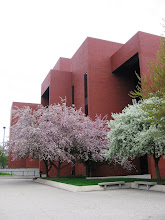
Since 2003, there have been 2,804 technology training sessions. These have been held at Bracken Library. Attendance at these events stands at 9,710 faculty and staff, many of whom have attended multiple sessions.

Dr. Deborah A. Ceglowski, associate professor in the Department of Elementary Education, said that since joining the Ball State faculty this academic year she has had more training in technology than in her previous 13 years of higher education experience elsewhere. “That sets the stage for how Ball State Libraries is providing support and training to faculty members,” she said. “I appreciate what they do.”

Dr. Susan A. McDowell, associate professor in the Department of Biology, said that she has learned how to use her iLocker, create a blog, and develop interactive PowerPoint presentations, thanks in part to the training services of TTSS. “The training and support I have received has made it easy for me to provide high quality presentations in all of my classes,” she said.

Dr. McDowell reports that the skills that graduate and undergraduate students gained from attending a PowerPoint “how-to” session were valuable to them in making posters. This skill will allow them to participate more easily in poster sessions at local, regional, national, and international meetings.

The unit’s decisions about which training sessions to offer and when depend on changes and updates in technology. For example, during last spring semester with the introduction of Sitecore — the University’s new content management system — new sessions in that technology were offered.

Similarly, sessions for Microsoft Office 2007 became in demand as more departments began to use the MS 2007 productivity suite. Generally, the weeks prior to fall and spring semesters result in an increase in the number of sessions on Blackboard, Gradebook, inQsit, and PowerPoint. All sessions are offered frequently to accommodate the schedules of busy faculty and staff.

Labels: , ,

Tuesday, May 15, 2007

A Bouquet of Opportunities for Ball State Faculty and Staff to Grow Technical Skills

Don’t you just love summer? The bright sun itself puts everyone in a great mood — colorful gardens, the sweet songs of the birds, too. These are nice contrasts to those who, only a few days or weeks earlier, were bogged down with the cold, clouds, paper grading, and the day-to-day hustle and bustle.

Nice weather makes it feel like we have more hours in a day, and the Technology Training Specialists here at the University Libraries’ Technology Training Support Services, would like to help you fill some of them. To do this, we have prepared a variety of opportunities for you to grow your technical skills and to cultivate technologies that may help you and your students.

Our Summer Faculty Enhancement Series 2007 includes some new features along with the ones popular from last year. Our “Web Tools” program focuses on newer technologies that promise great learning opportunities for students. These are technologies that are especially powerful for providing communication and collaboration opportunities and that add pedagogical value to your courses. Among these technologies are blogs, podcasts, and wikis.

For example, blogs provide the students a forum for discussing course topics and reflecting on what they have learned outside of class. Podcasts give the instructor another rich avenue to communicate course content as well as providing an opportunity for students to access course material for review and study. Wikis provide an easy-to-use medium for collaborative projects.

The Best of Blackboard Series 2007 will be offered over the summer, too. In this series, we explore a variety of course design and organization ideas to get you started and familiar with Blackboard. While learning the how-to of Blackboard technically, attendees will also have a chance to build their own courses by uploading content, creating assessment tools, and communication methodologies such as discussion boards and chats. Faculty will also have a first look at the new version of Blackboard that will be coming online in August, 2007.

For faculty who teach in a face-to-face classroom setting, using PowerPoint can be a double-edged sword. To escape using the familiar bullet pointed slides, join us for our PowerPoint Presentation Series 2007 so you can get started on building flexible, dynamic, visual presentations to become a "relational presenter" to engage your students with visual communication.

I hope you will explore these and other professional development opportunities that are being offered to faculty. I also hope you find many opportunities to enjoy the sunshine, work in the gardens, and listen to the birds — bonuses that summer offers.

To learn more about these and other Technology Training Support Services programs, contact Yasemin Tunc, at YTunc@bsu.edu, (765) 285-5902. To register for one or more of our programs, visit www.bsu.edu/techtrain.

This newsletter article first appeared in The Library Insider 5(5): 11; May 2007.

Labels: , , ,

Thursday, April 26, 2007

Report about Two Campus-Wide Surveys about Use of Technology by Faculty and Students

Personnel in the Ball State University Libraries’ Technology Training Support Services unit are usually involved with a project or two outside of our daily training and support roles. This academic year, we were part of two major survey projects.

Fall 2006 Campus-wide Faculty Survey of Use of Technology

During Fall Semester 2006, a campus-wide survey of faculty’s use of technology was conducted. The purpose of the survey was to learn how faculty use technology and to compare the results of this survey with those from a similar study conducted during Fall Semester 2003. The procedures followed, and the survey instrument employed, were very similar, with some questions from the earlier instrument not being used because they indicated mastery of certain skills (e.g. e-mail) and some new questions added to reflect the availability of new technologies and services (e. g. DMR). Assistance from the associate deans was enlisted to request faculty to participate in the survey.

Over all, 580 faculty members participated in the survey. Of those, 87% reported that they can perform general computing tasks (file management, software installation, etc.) with ease or with some ease. This is a 7% increase over the 2003 survey results. In 2003, roughly 72% of faculty members were comfortable (ease and with some ease) with productivity applications such as word processing, presentation, and spreadsheets. This year 80% reported that they perform these tasks with comfort. In this category, presentation software use reports showed considerable improvements. The most impressive improvement was reported in the instructional technology category. In 2003, 43% reported using tools such as Blackboard, Gradebook, and inQsit with ease or with some ease. This year, the number reached 72%.

There are many reasons for the increase in comfort level with technology among faculty. Technology is certainly easier to use these days and students provide the gentle nudge for faculty to acquaint themselves with tools like Gradebook and Blackboard. Some of the credit goes to personnel in Technology Training Support Services, too, since the unit has offered 1,744 courses during this period and our figures indicate faculty attendance at 1,469 (not unique individuals.)
These figures do not even include the countless times we visited with faculty for one-on-one training. So kudos to the Ball State faculty who have taken the time to sharpen their skills! And a BIG thank you to all who have taken the time to visit with us to explore the best uses of technology in teaching, learning, and research.

Spring 2007 Student Survey of Technology Use
The Student Technology Use survey was the second major project undertaken this year. It was conducted during the first part of spring semester. An impressive 12% return rate confirmed what we already knew: our students are heavy technology users. Of course, there is still more work to be done.

Of the respondents, 90% report turning in assignments to faculty on paper as one of many options. Printing sky rockets at the conclusion of each semester from 1.7%, who report printing over 100 pages per week, to 37%. Even though a majority (86%) have heard of iLocker, only 48% report using it. With so many electronic file storage and exchange options — 82% report owning a flash drive — we hope use of paper will diminish gradually. In this regard, our technology training specialists are happy to work with faculty to help them discover paperless assignment collecting and grading options.


Technology Training Opportunities
Technology Training Support Services provides training opportunities year round. I invite all faculty to visit one or more of these sessions to explore a variety of educational technologies and how they best fit faculty classroom instruction and pedagogy whether it is in a room or in cyberspace.

For more information, contact Yasemin Tunç, Ball State University Libraries’ Director for Technology Training Support Services, YTunc@bsu.edu, (765) 285-5902.


This newsletter article first appeared in The Library Insider 5(4): 9; April 2007.

Labels: , , , ,