Friday, July 31, 2009

Ball State University Libraries Offer New User Experiences in Second Life


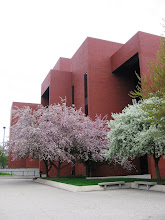
Bracken Library now exists virtually as well as being a brick-and-mortar facility. The University Libraries’ collaboration with the Center for Middletown Studies and the Institute for Digital Intermedia Arts and Animation has resulted in the creation of Bracken Library in the virtual world of Second Life. Within this virtual world, archivists, historians, and virtual world modelers created the Middletown Studies Library and Archives.

Second Life is an online three-dimensional virtual world where users or “residents” use avatars to interact with one another. Ball State University Libraries Archivists Maren L. Read and Carolyn F. Runyon offer virtual reference services three times a week to support “in-world” researchers.

To chat with Em Ziplon, a.k.a. Archivist for Manuscript Collections Maren Read, visit Bracken Library in Second Life on Mondays and Fridays, from 10 a.m. – 12 p.m.

To chat with Carolyn Runyon, a.k.a. Archivist for Digital Development and University Records, visit Bracken Library in Second Life on Tuesdays, 8 a.m. – 11 a.m.

The Middletown Studies Collection Library and Archives features exhibits displaying the unique resources available from Ball State University Libraries’ Archives and Special Collections. Based on Robert and Helen Lynd’s sociological study of Muncie, Indiana, conducted in the 1920s, the exhibit features materials that revisit the six areas of life and culture studied by the Lynds:

1. Getting a Living
2. Making a Home
3. Training the Young
4. Using Leisure
5. Engaging in Religious Practices
6. Engaging in Community Activities

Materials exhibited include excerpts from oral histories and photographs, many of which are available from the Digital Media Repository, which is a digital resource available from the University Libraries at http://libx.bsu.edu. Additionally, the collection features the Bracken Library Theater that will play film footage available from Archives and Special Collections, including The Man Haters, a silent movie produced in Muncie, Indiana in 1915.

The new resources and services available from the Middletown Studies Collection Library and Archives in Second Life have been made possible through an Innovative Library Program Grant awarded to the Ball State University Libraries for 2008-2009. This grant is part of the Library Services and Technology Act (LSTA), which is administered by the Institute of Museum and Library Services and the Indiana State Library.

For more information, contact Maren L. Read, Archivist for Manuscript Collections, or Carolyn F. Runyon, Archivist for Digital Development and University Records, libarchives@bsu.edu, 765-285-5078.

Labels: , , ,

Tuesday, May 26, 2009

Ball State University Libraries’ Archives and Special Collections Now Providing Reference Services in Second Life


Ball State University Libraries’ Archives and Special Collections now offer reference hours in Second Life, a free online virtual world.

Archivists Maren Read, a.k.a. Em Ziplon, and Carolyn Runyon, a.k.a. Carolyn Robonaught, are available to answer questions on Mondays and Fridays from 10 a.m. to noon and Tuesdays from 8 a.m. to 11 a.m. A “drop box” is also available at the reference desk to leave questions and comments about the University Libraries and the Middletown Studies Library and Archives 24/7.

This new service has been made possible, in part, through an Innovative Library Program Grant for 2008-09 to the University Libraries as part of the Library Services and Technology Act (LSTA), funding for which was appropriated by the U.S. Congress in 1996 and administered by the Institute of Museum and Library Services and the Indiana State Library.

In collaboration with Ball State’s Center for Middletown Studies and the Institute for Digital Intermedia Arts and Animation (IDIAA), the University Libraries’ Archives and Special Collections has been working this past year to develop the virtual Bracken Library and the virtual Middletown Studies Library and Archives on the Ball State University Island in Second Life.

When the project is complete in June 2009, students, faculty, and researchers will be able to chat with archivists, explore an exhibit on the history of Muncie as Middletown, watch films such as The Man Haters (35 mm silent movie filmed in Muncie in 1915) in the library screening room, and gather for classes and meetings “inworld.”

For more information, contact Maren L. Read, Archivist for Manuscript Collections, or Carolyn Runyon, Archivist for Digital Development and University Records, LibArchives@bsu.edu, 765-285-5078.

Labels: , , , ,

Monday, June 16, 2008

LSTA Innovative Library Program Grant Supposrt Second Life Library Project

An LSTA Innovative Library Program Grant award in the amount of $5,400 will be used to create a virtual reference area and exhibit. These will serve as a test bed for experimentation and innovation centering on provision of digital content and library services for the expanding user population participating in Second Life, http://secondlife.com, a 3-D virtual world. The prototype reference area will provide access to subject specialists and interactive exhibit modules focused on the University Libraries’ rich resources documenting Muncie, Indiana as “Middletown,” a representative American community.

The project will allow librarians to develop the skills necessary to provide rich library resources and services using state-of-the-art new media in this emergent digital environment. The University Libraries will support the work of students and faculty in Second Life while developing best practices for the provision of library services in virtual worlds for the benefit of libraries statewide.

Second Life is a compelling 3-D virtual world where library users can meet and interact in an immersive and collaborative environment. Participants access the world using a computer and are connected in the virtual environment where they create an avatar, a virtual representation of themselves, that they can control in the same manner that one might control a video game character.

Ball State University faculty and students are increasingly using the Second Life world as a virtual classroom. Lectures are conducted and group projects are being undertaken in it. There is great potential for Second Life to become a vehicle for distance education, allowing students to interact in virtual classrooms and library spaces.

For the project, Archives and Special Collections and the Center for Middletown Studies will collaborate to develop content for the exhibit. The central purpose of the exhibit will be to provide an overview of Muncie as Middletown, a representative American community. There will be a core module that will provide an introduction to the Studies. Additional modules will present the six subject areas covered by the Middletown Studies. The modules will include interactive elements such as click-through PowerPoint presentations and hyperlinks to external resources and streaming media such as oral histories and film clips.

The reference area will include a desk and a “drop box.” The desk will be staffed on a scheduled basis and by appointment for the provision of reference services. The “drop box” acts as a mailbox allowing visitors to leave messages and questions for staff when they are absent from the desk or to schedule reference interviews with an archivist.

For more information, contact John B. Straw, Assistant Dean for Digital Initiatives and Special Collections, JStraw@bsu.edu, 765-285-5078

Labels: , , , ,

Friday, August 17, 2007

The Ball State University Libraries Begins to Explore Second Life for Its Promise as a Virtual World of Opportunities for Learning, Research

In the July 2007 issue of the Ball State University Libraries’ newsletter, The Library Insider, Dr. Arthur W. Hafner, Dean of University Libraries, reported about a Working Group to explore a Library foray into the multi-user virtual environment of Second Life. A recent continuing education session for library staff provided an overview of companies, organizations, and libraries with a presence in this multi-user virtual environment.

Consider, for a moment, the possibilities that engagement with a virtual world could afford the Ball State University community. Imagine an interactive special collections exhibit featuring rare and archival materials that is available 24/7/365. The exhibit explains the scope and content of the collections and how to use the materials to conduct research and create new knowledge.

Interactive displays link to external web pages and digital resources, and they serve as portals to an expanded universe of information. In-world avatars act as docents and reference assistants to orient patrons to what they encounter there. Professors and instructors lead virtual field trips to the exhibit and assign coursework supported by the archival materials made available in this virtual environment.

The exhibit area would act as a meeting place, classroom, and digital repository. Learning opportunities like this and more are possible in Second Life, allowing libraries to reach their users no matter where they might be in the physical world.

The University Libraries are working to offer reference and instructional services and to mount virtual exhibits in Second Life. The Information Services unit is developing a reference area, promotional displays, interactive tutorials, and an instructional environment. Much like the Reference Desk and library classrooms in Bracken's physical space, these areas will serve the users of University Libraries' virtual resources.

Archives and Special Collections are working on a Middletown Archives & Library that will provide access to digitized archival materials documenting the use of Muncie (as Middletown) as a representative American Community. Some of the digitized resources to be made available include photographs, maps, newspapers, and oral histories.

Through development of such resources, the University Libraries hope to explore the role of academic libraries in the virtual environment. Several questions arise regarding this role, including:
Who are our patrons in such an environment, targeted and unexpected?
How are reference and instructional services to be delivered to avatars?
How do those transactions differ from real life reference and instructional transactions?
What are the advantages and disadvantages of delivering library services to avatars?
How do librarians promote teaching, learning, research, and public service in a virtual environment?


The University Libraries are actively seeking students and faculty as partners to collaborate with University Libraries’ personnel to create opportunities such as those outlined above.

For more information or to express an interest in participation in this project, contact Philip James Deloria, Assistant Archivist for Digital Projects and University Archives, PJDeloria@bsu.edu, (765) 285-5078.

Labels: , ,