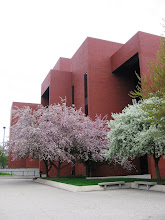
Bracken Library Will Host Marathon Screening of Ken Burns’ The War

Bracken Library will host a two-day marathon showing of The War, a film by Ken Burns, on January 30-31, 2010, as part of the Muncie Public Library/Ball State Public History Program’s upcoming speakers series, “America and the World in the 1940s.” The film is fifteen hours long and was six years in the making.
Dr. Michael Doyle is the Academic Advisor for Adult Programming at Muncie Public Library. After making the decision to show the film to the public, he began looking for a place that had high student traffic, was conveniently accessible for Muncie community members, and comfortable for viewing such a long presentation. Bracken Library’s room 104 was the perfect choice. Dr. Doyle said, “I am always looking to foster more town and gown relationships for Ball State.”
With Bracken Library being so well-known by both students and community members, Doyle imagines that many people will find it convenient to slip in and slip out, as desired.
“World War II is a perennial subject of fascination,” says Dr. Doyle, since it touched everyone’s lives, whether soldiering in the European or Pacific Theaters or staying on the home front growing victory gardens, working in assembly plants, or watching loved ones go off to war. Doyle notes that through the years, many veterans of the war have not been talkative about their experiences in the war, which “enhances its mystique” for so many family members of all ages, from college students on up.
Dr. Doyle says that the Ken Burns film is the first in our generation to interweave the European, Pacific, and home front activities, rather than treat them separately. It “gives a sense of what it was like to be alive in the 1940s, when you did not know what would happen from one day to the next.” The film also pays special attention to the affect of the war on and the involvement of African Americans, Asian Americans, Native Americans, and Hispanic Americans.
When The War originally aired on PBS in September 2007, many local PBS stations were given the opportunity to develop related
programming. For WIPB, Ball State personnel directed and produced the Telly-winning Echoes of War, a live 60-minute interactive educational program (www.bsu.edu/wipb/echoesofwar/about.asp), which Ken Burns introduced and closed. Because of Burns’ involvement in 2007, he personally made the decision that his production company, Florentine Films, would waive the usual public screening fee for this upcoming 2010 showing of The War at Bracken Library.
The marathon screening of Ken Burns’ The War will take place in Bracken Library’s room 104 over the weekend of January 30-31, 2010, from 10:00 A.M. to 6:00 P.M. both days. The War was directed and produced by Ken Burns and Lynn Novick.
Labels: Bracken Library, history, world war II
posted by Ball State University Libraries @ 9:40 AM
0 comments